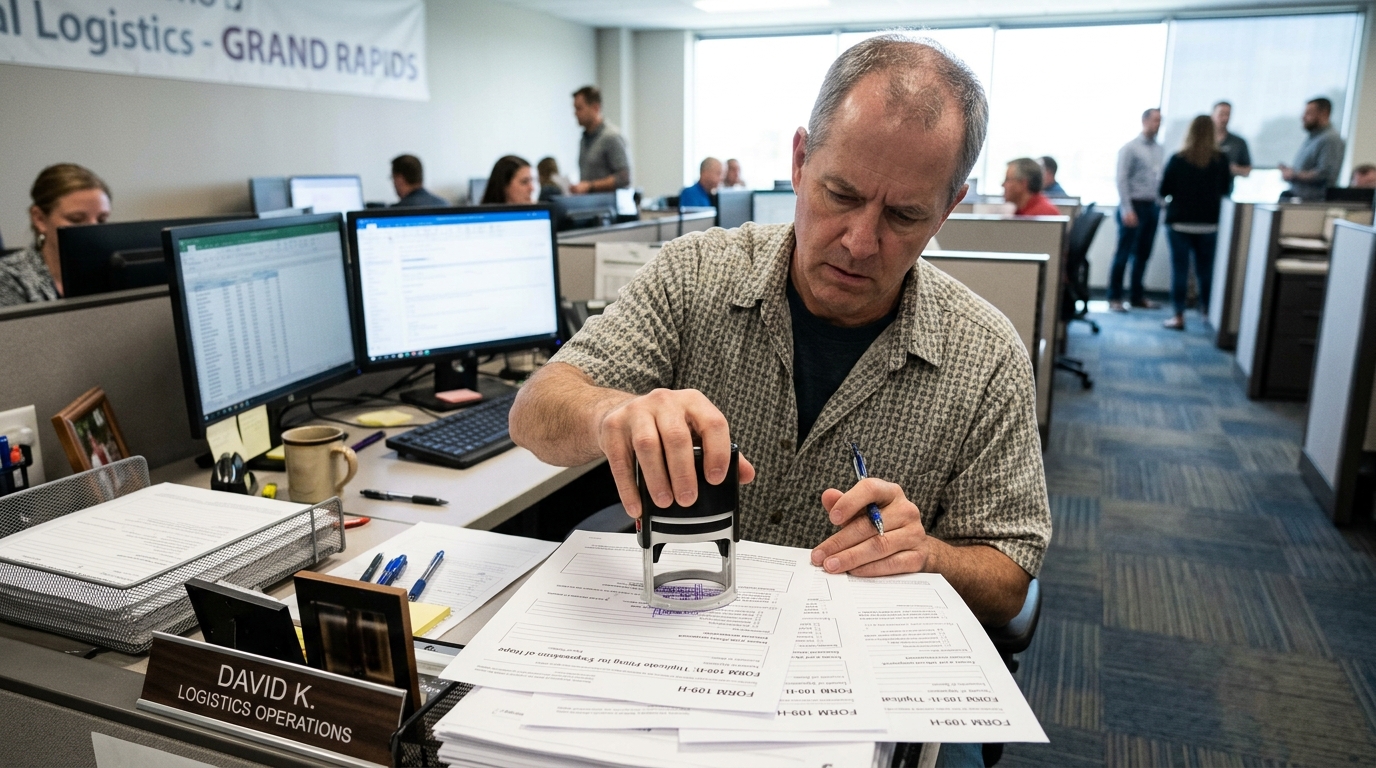
GRAND RAPIDS, Mich.—Midwest logistics giant Apex Supply Solutions announced Monday the implementation of a new administrative framework requiring employees to formally register and obtain managerial approval for all expressions of hope.
The policy, which takes effect September 1, introduces Form 109-H (“Notice of Intended Optimism”). Under the new guidelines, staff members are prohibited from uttering positive projections regarding project deadlines, supply chain stabilization, or quarterly revenue targets without a signed, three-part carbon copy authorization from their direct supervisor.
According to an internal memo distributed to staff, the measure is designed to mitigate the operational risks associated with “unhedged enthusiasm” and protect the company’s balance sheet from sudden fluctuations in morale.
“Unregulated hope is essentially an unbacked financial liability,” said Marcus Vance, Chief Compliance Officer at Apex. “When an employee tells a client, ‘We should have those microchips by Tuesday,’ without a filed Form 109-H, they are trading in emotional futures we cannot guarantee. By standardizing the optimism pipeline, we ensure that every positive outlook in the building is fully audited and compliant with our quarterly risk-tolerance models.”
Under the new protocol, hope is divided into three distinct administrative tiers. Tier 1 covers localized, low-risk optimism, such as believing a department meeting will end early or that the breakroom refrigerator has been cleaned. These require only verbal notification to a shift supervisor. Tier 2 hope—such as anticipating a year-end bonus or expecting a difficult client to remain calm—requires a completed Form 109-H, accompanied by a two-page historical impact assessment. Tier 3 hope, which includes believing the company’s long-term strategy will prevent automation-driven restructuring, must be escalated to the Board of Directors and is subject to a 14-day cooling-off period.
“It definitely makes you think twice before looking forward to things,” said Sarah Jenkins, a senior logistics coordinator who has worked at the Grand Rapids branch for six years. “Last Tuesday, I casually told a colleague I hoped the rain would hold off for the outdoor team-building lunch. I forgot to file the pre-clearance waiver, and by Wednesday morning, compliance had flagged me for a ‘speculative lifestyle projection.’ Now I just keep my expectations flatly aligned with the historical five-year regional average.”
To enforce the policy, Apex has established an Office of Enthusiasm Reconciliation. If a project for which a Form 109-H was filed ultimately misses its deadline, the filing employee must submit a Form 110-D (“Amortization of Disappointment”) to write off the lost optimism over the subsequent fiscal quarter.
Industry analysts suggest other logistics firms are closely watching the rollout. A preliminary report from the McKinsey Global Institute indicates that standardizing corporate hope could save mid-sized enterprises up to 400 hours annually in lost productivity previously spent on mutual encouragement.