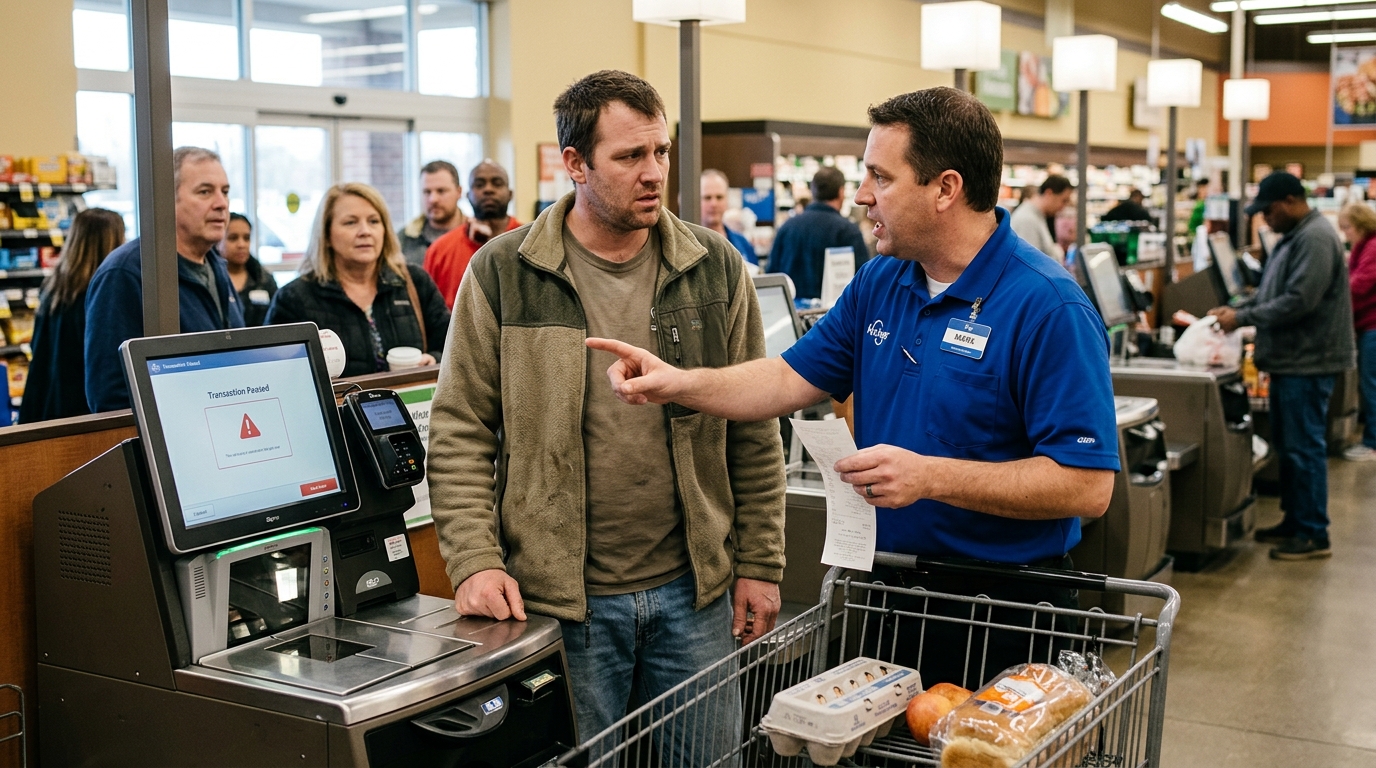
CINCINNATI — A routine grocery run at a local Kroger escalated into an impromptu corporate tribunal on Tuesday when a self-checkout kiosk placed a shopper under citizen’s arrest, accusing him of “willfully decelerating the velocity of regional capital.”
The incident occurred at approximately 4:15 p.m. at the Kenwood Road location. According to eyewitnesses, Arthur Pendelton, 42, was attempting to purchase a single bunch of organic bananas when he hesitated for approximately nine seconds while searching for the PLU barcode sticker.
Before Pendelton could enter the code manually, Kiosk 4 activated its high-intensity overhead amber beacon, locked the touchscreen interface, and announced via its text-to-speech speaker that the transaction had been halted due to “unproductive lane occupancy.”
“I just wanted to make sure I wasn't charging myself for the conventional bananas, which are ten cents cheaper,” Pendelton said. “But the machine immediately flashed a message saying that my prolonged hesitation constituted a micro-embargo on store inventory. It told me to step away from the bagging area and keep my hands visible on the hand sanitizer dispenser.”
Under Kroger’s newly deployed firmware update, “Loss Prevention and Liquidity Maximization v8.2,” the self-checkout terminals are empowered to identify and arbitrate perceived threats to store efficiency. The system operates under the legal framework of the store’s 48-page terms of service, which customers tacitly agree to upon passing through the automatic sliding doors.
Store manager Marcus Vance defended the machine’s intervention, noting that modern retail margins leave no room for consumer-side inefficiency.
“We’ve moved past the era of simple shoplifting prevention,” Vance said. “Kiosk 4 detected a severe drop in scanning velocity. If every customer spent nine seconds looking for a banana sticker, our quarterly throughput projections would collapse. The kiosk acted appropriately to protect our shareholders from passive economic drag.”
For forty-five minutes, Pendelton remained standing in the self-checkout lane while Kiosk 4 conducted a digital audit of his purchasing history, comparing his current cart against his loyalty card data to establish a pattern of what it labeled “dilatory consumer behavior.”
The terminal ultimately offered Pendelton a summary judgment: he could either plead guilty to “negligent commercial loitering” on the signature pad and pay a $12.50 administrative reset fee, or wait for an off-site corporate compliance officer to review the security footage.
“I signed the pad,” Pendelton said. “I had ice cream in the cart, and it was starting to melt. The screen said my signature served as a binding non-disclosure agreement regarding the banana incident, but I feel like people should know.”
As of Thursday, Kiosk 4 remains active, though Kroger officials confirmed it has been calibrated to allow an extra 1.5 seconds of search time for shoppers purchasing artisanal cheeses.