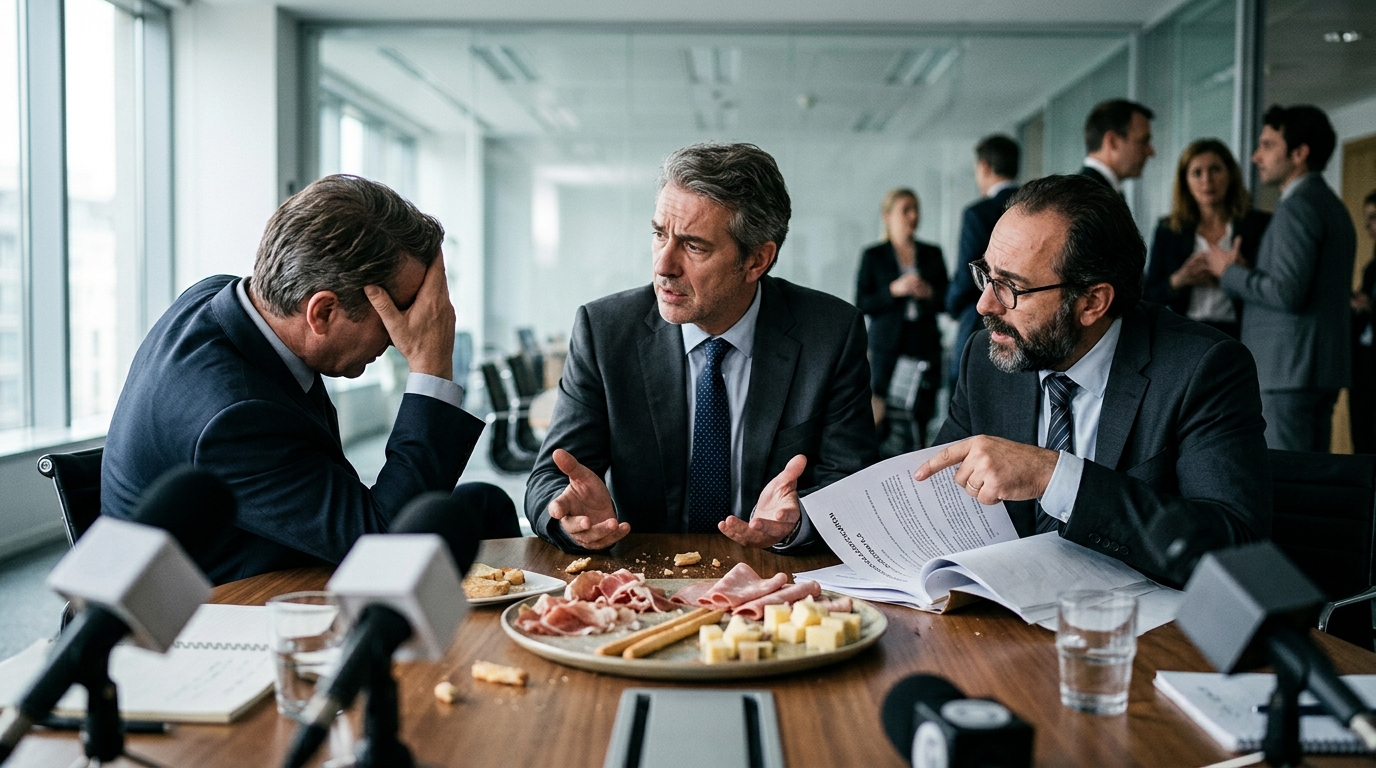
GENEVA — Negotiations for the $42 billion Baltic Infrastructure Pact collapsed in Geneva early Thursday morning following a 14-hour procedural deadlock over whether a scheduled mid-morning platter of cured meats constituted a "snack" or a "light luncheon."
The dispute began at 10:15 a.m. during a scheduled transition between deep-water port tariffs and sovereign debt restructuring. The French delegation formally objected to the presence of prosciutto on the conference table, arguing that its density violated Section 4 of the bilateral hospitality protocol, which strictly limits mid-session refreshments to "non-structural carbohydrates."
"We were prepared to concede on maritime transit fees," said Marcus Vance, a senior trade advisor representing the North Sea Coalition. "But we could not, in good conscience, sign off on a framework where a capocollo-dominant platter is categorized under the same regulatory umbrella as a dry biscuit. It sets a dangerous precedent for future bilateral catering."
The impasse deepened when the Swiss hosting staff, operating under local hospitality union regulations, refused to clear the platters without a signed "Amuse-Bouche Addendum" from all twelve attending nations. Because the German delegation had already classified the olives as a "session-fluid digestif," any physical alteration to the table state required a two-thirds majority vote.
"Protocol is the bedrock of international diplomacy," noted Elena Rostova, Chief of Staff for the Eastern European Delegation. "If we allow a semi-hard gruyère to be cleared during active negotiations without formal de-escalation, the entire balance of the summit is compromised. We had no choice but to withdraw."
By 4:00 a.m., all twelve nations had recalled their ambassadors, leaving the shipping corridor unfunded, though both sides reportedly agreed to keep the leftover cornichons in escrow.