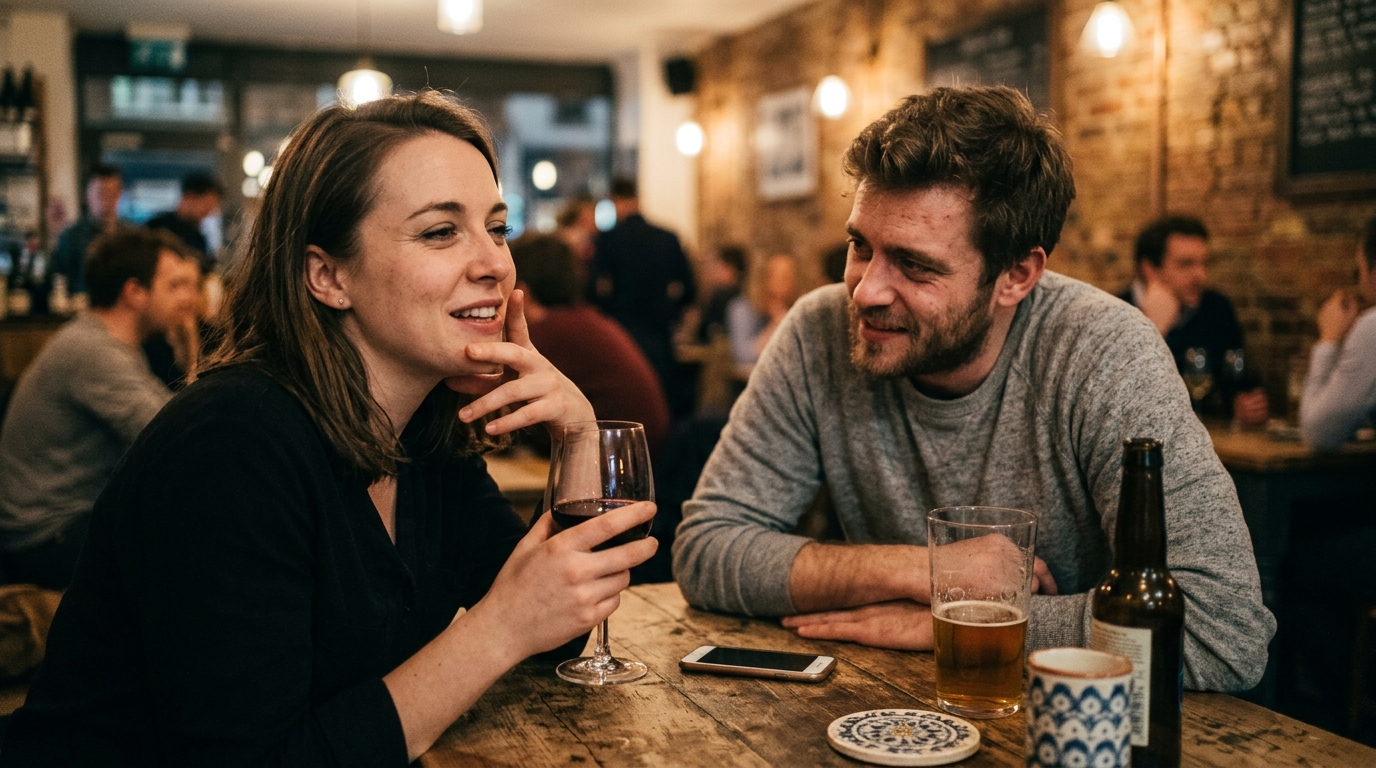
SAN FRANCISCO — A new digital matchmaking platform is capturing a significant share of the online dating market by abandoning traditional compatibility metrics in favor of pairing users based entirely on their most insufferable personality traits.
The application, called Friction, has amassed more than two million active users since its quiet beta launch in March. Developed by a team of behavioral psychologists and software engineers, the platform’s proprietary algorithm bypasses shared hobbies, music tastes, and career ambitions, focusing instead on identifying and interlocking users’ primary psychological defects.
Upon registering, users do not list their favorite travel destinations or upload photos of themselves hiking. Instead, they must complete a mandatory 120-question diagnostic test designed to isolate their worst relationship habits. Questions ask users to rate their tendencies toward weaponized incompetence, conversational dominance, chronic lateness, and passive-aggressive household management.
"Traditional dating apps are built on the false premise that harmony leads to longevity," said Marcus Vance, co-founder and chief product officer of Friction. "But harmony is fragile. Friction, however, is a physical law. By pairing a person who is pathologically incapable of choosing a restaurant with someone who possesses an authoritarian need to control every menu order, we create a highly stable, self-regulating ecosystem."
According to company data, the app’s most successful pairings involve complementary dysfunctions. Popular matches include individuals who "always arrive 20 minutes late to everything" paired with those who "experience physical anxiety if they are not 15 minutes early."
Sarah Jennings, a 29-year-old actuary from Chicago, met her current partner, David Mercer, on the platform four months ago. Jennings' profile flagged her as an "unresponsive texter who replies to urgent queries with single emojis three days later," while Mercer was classified as an "anxious double-texter who sends follow-up question marks within ninety seconds."
"On our first date, I didn’t show up for forty-five minutes, and David sent me twelve escalating messages demanding to know if I was dead," Jennings said. "In the past, that would have been a red flag for both of us. But on Friction, we knew exactly what we were getting into. It’s comforting. He gives me the space to ignore him, and I give him a legitimate reason to be anxious."
Sociologists studying the platform suggest that these high-friction relationships may actually prove more durable than traditional ones.
"What we are seeing is a state of toxic homeostasis," said Dr. Aris Thorne, a relationship sociologist at Northwestern University. "When two people with perfectly opposing flaws find each other, they no longer need to undergo the difficult personal growth required to sustain a healthy relationship. They can simply remain their worst selves forever, locked in a perfect, adversarial orbit."
Friction recently introduced a premium tier, which allows users to filter potential matches by highly specific annoyances, such as "uses the phrase 'we need to talk' as a conversational transition" or "explains the plot of movies while they are playing."
The company reports that its retention rates are currently double the industry average, as very few matched couples ever delete the app. Instead, many use its built-in arbitration feature, which allows partners to log daily grievances directly into a shared ledger, ensuring that neither party ever forgets exactly why they are together.