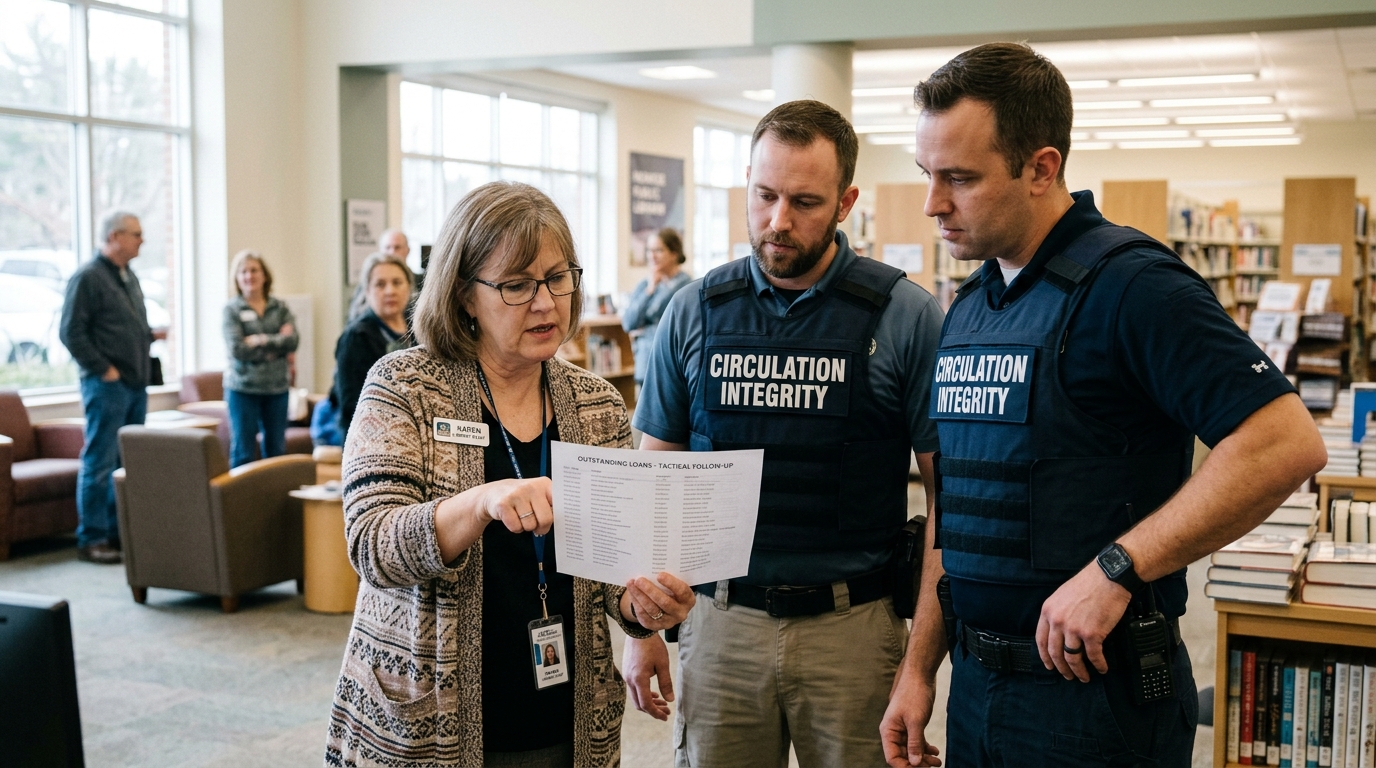
MONROE, Ohio — The Monroe Public Library has officially retired its traditional ten-cent daily late fee, replacing the system with a dedicated Circulation Integrity Unit (CIU) tasked with actively investigating and recovering overdue materials through surveillance, tactical canvassing, and forensic behavioral profiling.
The department, which began operations earlier this month, treats any library asset unreturned after a 72-hour grace period as an "active custodial leakage." Rather than waiting for passive compliance, CIU field agents are deployed directly to the residences of delinquent borrowers to secure the perimeter and establish contact.
The escalation of the library’s recovery protocol was felt last week by Monroe resident Sarah Jenkins, whose copy of Gillian Flynn’s *Gone Girl* was due on August 8.
"I woke up on Tuesday morning to find two individuals in navy windbreakers standing at the end of my driveway," said Jenkins, a 34-year-old actuary. "One of them was taking notes on a clipboard while the other used a telephoto lens to photograph my vehicle's dashboard. When I went outside, they asked if I knew the whereabouts of barcode number 3900201148."
According to library officials, the aggressive posture is a necessary response to a declining respect for public property. Under the new guidelines, the library no longer accrues monetary fines, which administration officials characterized as an inefficient deterrent. Instead, non-compliance triggers a multi-phase recovery operation.
"A book sitting on a nightstand is a book stolen from the community," said Marcus Vance, Monroe’s Director of Circulation Retention. "When a patron crosses the 72-hour threshold, our relationship changes. We are no longer hosts; we are investigators tracking a missing government asset. We must think like the borrower to find the book."
The CIU relies heavily on bibliographical profiling. Dr. Linda Kates, the library's chief behavioral analyst, constructs psychological profiles of delinquent patrons based on their checkout history, local utility bills, and social media activity to predict where the missing book might be hidden.
"In the case of Ms. Jenkins, her history showed a high completion rate for historical non-fiction but a tendency to stall on modern suspense," Dr. Kates said. "We knew we weren't dealing with a deliberate hoarder, but rather an overwhelmed reader suffering from narrative fatigue. Our field team focused their surveillance on high-clutter zones, specifically the glove box of her sedan and her downstairs half-bath."
Following a four-day stakeout and three interviews with Jenkins' immediate neighbors regarding her reading habits, the paperback was successfully recovered during a negotiated curbside handoff in the library’s lower parking lot.
The library board has defended the program's $184,000 pilot budget, which was funded by diverting resources from the children's summer reading program. Board members noted that book return rates have increased by 94 percent since the CIU's deployment, though overall library card registrations have dropped to an all-time low.
"We are currently training two canine units to detect the specific scent of aged binding glue and damp pulp," Vance said, inspecting the recovered copy of *Gone Girl* for signs of spine damage. "The days of hiding a copy of *Infinite Jest* under a bed are officially over."