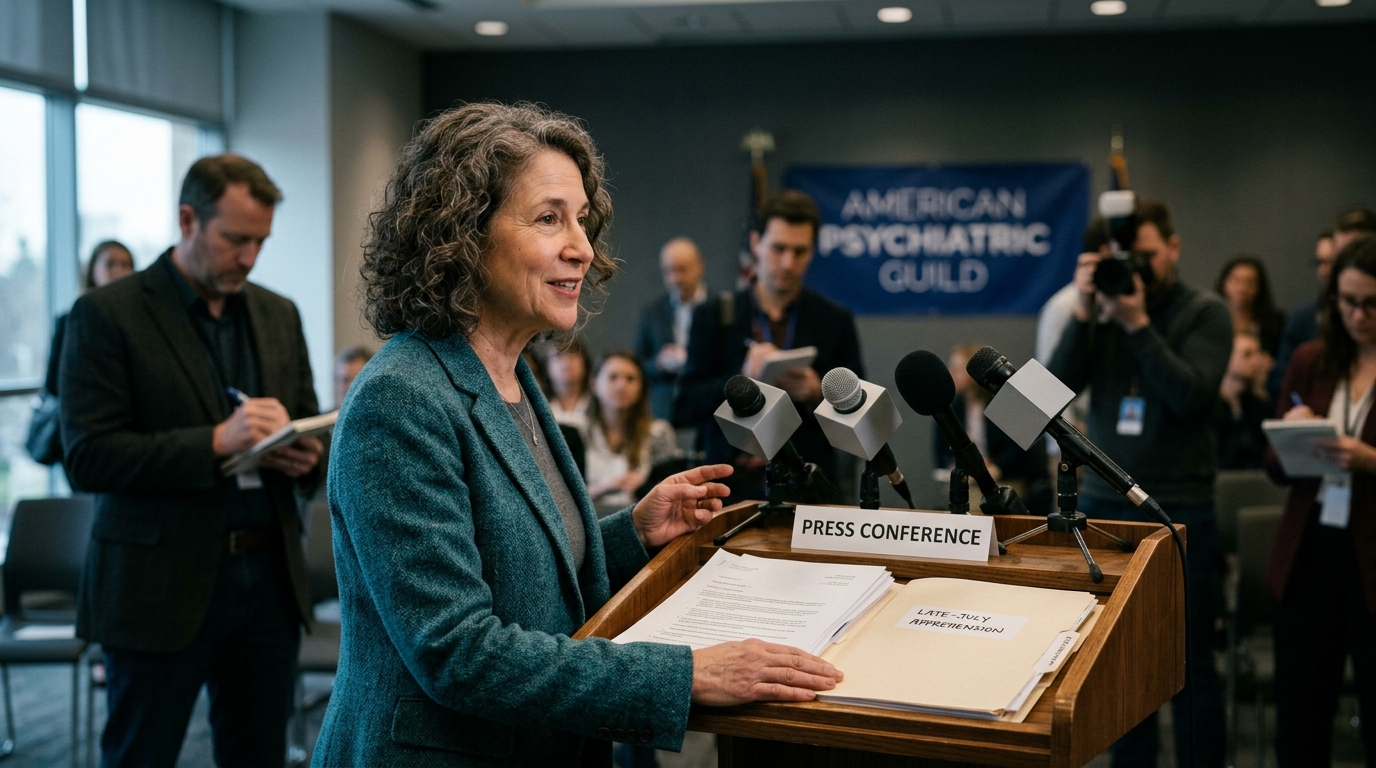
BALTIMORE — The American Psychiatric Guild (APG) announced Thursday that it has successfully patented the precise emotional sinking sensation that occurs when a person realizes July is more than half over, officially designating the feeling as a proprietary seasonal condition.
The emotion, clinically cataloged as *Estival Decrescendo* but marketed to clinicians as "Estival Fade™," has been added to the diagnostic registry as an exclusive, seasonal intellectual property. Under the new licensing agreement, the feeling may only be diagnosed, discussed, or treated in therapeutic settings between July 15 and September 1 of any given fiscal year.
According to the APG’s filing with the U.S. Patent and Trademark Office, Estival Fade is characterized by "a sudden, non-acute grief triggered by the sight of back-to-school retail displays, a compulsive mental calculation of remaining weekend afternoons, and an ambient sense of guilt regarding unused patio furniture."
"For decades, individuals have been experiencing this specific late-summer melancholy in an unregulated, non-monetizable fashion," said Dr. Aris Thorne, director of the APG’s Committee on Affective Realignment. "By establishing a clear proprietary window for Estival Fade, we can protect the integrity of the emotion while ensuring that healthcare networks can bill for it systematically."
The exclusive therapeutic rights to Estival Fade have been licensed to digital wellness platform AuraMind, which has already launched a suite of subscription-based clinical interventions. Users of the app can select from three tiers of treatment: "Basic Pining," "Standard Drift," and a premium "Sub-Acute Autumnal Panic" module.
"By treating this feeling as a seasonal product, we create a healthier, more urgent emotional lifecycle," explained Sarah Jenkins, AuraMind’s chief product officer. "If a subscriber attempts to log a feeling of 'unfulfilled summer expectations' in April, the app will gently lock them out and redirect them to our Springtime Apathy™ module. We want to prevent emotional spillover and protect our Q3 margins."
Major health insurance providers have quickly adopted the new framework. Starting next week, patients who report staring blankly at a half-empty bottle of insect repellent will require a pre-authorization code to ensure their despair matches the licensed Q3 diagnostic criteria.
Critics within the academic community have raised concerns about the narrowing definition of human experience, but the APG maintains that productization is the only way to ensure quality control over modern feelings.
"Without standardization, people might mistake simple Tuesday-afternoon fatigue for genuine, high-value Estival Fade," Dr. Thorne said. "We owe it to our patients to make sure that when they stare out a window at 4:15 p.m. and wonder where the year went, they are doing so under the supervision of a licensed trademark holder. authorized trademark holder."