FAIRLAWN, Ohio — The Fairlawn City Council voted 5–2 on Tuesday to transition the municipal streetlight grid to a tiered subscription model, requiring homeowners to pay a monthly utility premium to keep the public lamps outside their properties fully illuminated.
The initiative, branded as "LuxNet," will take effect on July 1. Under the new system, the city’s 4,200 newly installed smart-LED streetlights will default to a "Basic Eco-Glow" of 15% brightness after dusk. Residents who wish to maintain standard illumination must enroll in one of three monthly subscription tiers managed by Vesper Infrastructure Solutions, the private contractor overseeing the rollout.
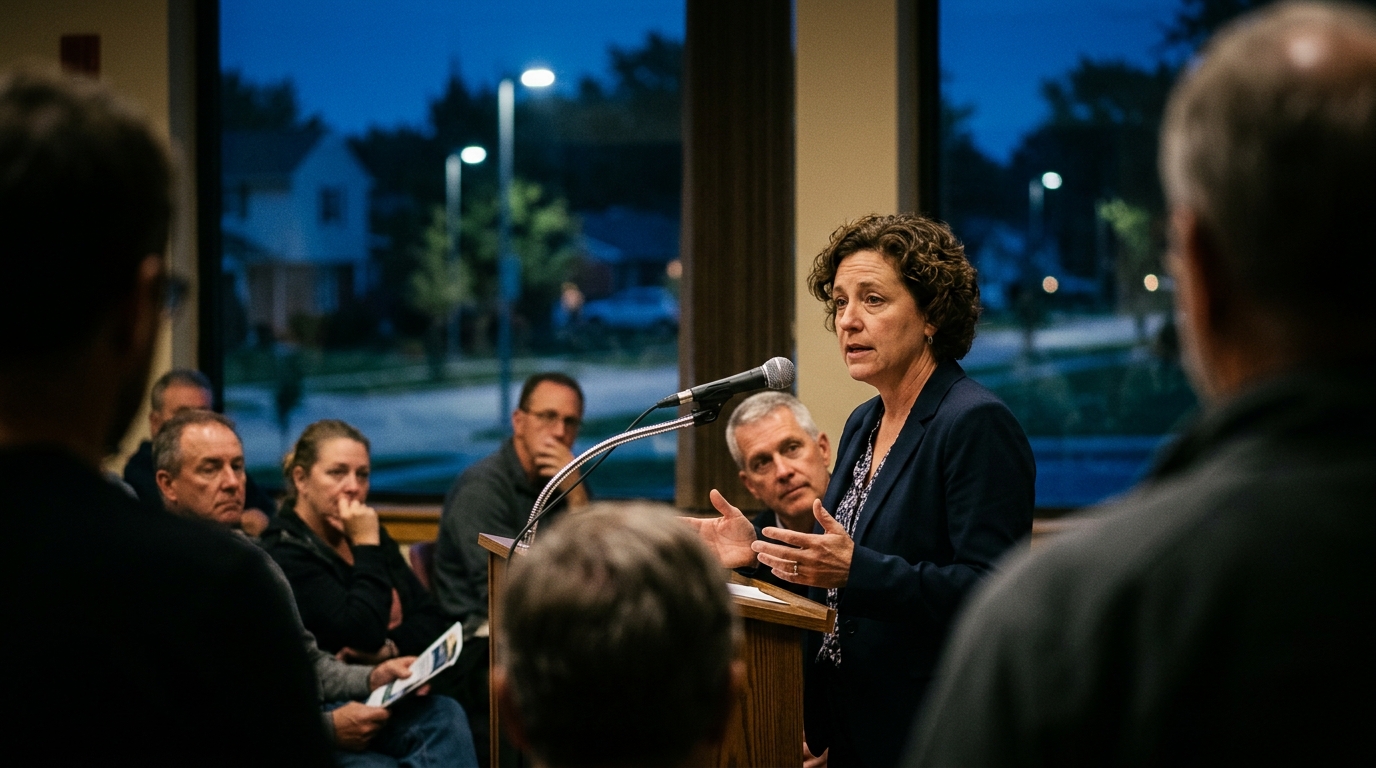
City Manager Arthur Pendelton defended the policy at a tense town hall meeting, framing the transition as a victory for fiscal responsibility and consumer choice.
"For decades, we have forced residents who sleep with their blinds closed to subsidize the nighttime illumination of residents who take late-evening strolls," Pendelton said. "LuxNet corrects this inequity. By treating municipal photons as an on-demand utility rather than an entitlement, we are projected to close our municipal budget deficit by fiscal year 2028."
Under the published rate sheet, the "Standard Lumens" package costs $14.99 per month, which guarantees 100% brightness from dusk until 11:00 PM, after which the bulb dims to the basic glow. The "Midnight Premium" tier, priced at $24.99 per month, extends full brightness until dawn and includes "Motion-Boost," which temporarily increases illumination when the light's built-in sensors detect footsteps or vehicle movement.
A third, ad-supported tier is available at no cost to residents who consent to have the streetlights outside their homes flash amber or blue to signal active promotions at nearby retail centers.
Local homeowners have expressed confusion over how the localized dimming will affect neighborhood safety and property values. Clara Higgins, a resident of the Whispering Pines subdivision, noted that her cul-de-sac’s illumination will now depend entirely on her neighbors' financial decisions.
"I registered for the Midnight Premium package because I walk my dog late," Higgins said. "But my neighbor at No. 14 says he refuses to pay for 'government-manufactured daylight' and is staying on the free tier. Now, the eastern half of our street is a bright, welcoming corridor, and the western half looks like the opening scene of a cold-case documentary."
According to Vesper Infrastructure Solutions, the smart-LED bulbs utilize geofenced cellular receivers to adjust brightness based on real-time billing data. If a resident's payment fails or their credit card expires, the corresponding streetlight will enter a 48-hour "grace period" of rapid yellow pulsing before dropping to the 15% baseline.
The council is already studying the feasibility of expanding the subscription framework to other municipal assets. Preliminary proposals presented Tuesday evening included a "Pavement-Plus" pass for priority pothole repair and a tiered response structure for the local fire department.
"Infrastructure is a service, not a permanent state of being," Pendelton said. "We look forward to leading Ohio into a more customized, transactional civic future."