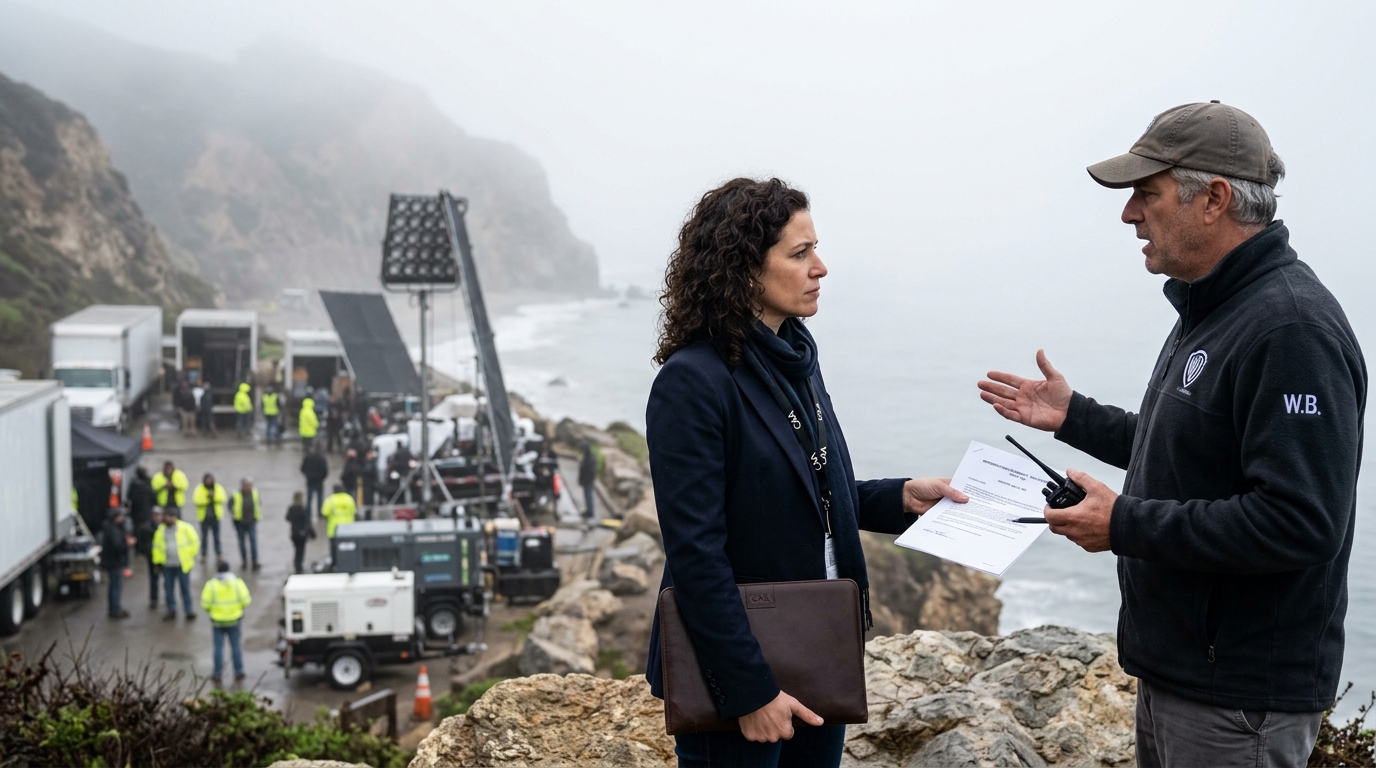
MALIBU, Calif. — Production on Warner Bros.’ upcoming maritime epic *The Last Horizon* has resumed under strict environmental conditions after the Point Dume Marine Layer formally retained representation with Creative Artists Agency (CAA) to negotiate its participation in the film.
The agreement, finalized late Tuesday following a three-week production standstill, marks the first time a regional meteorological phenomenon has secured formal Hollywood representation. Under the terms of the interim contract, the dense bank of coastal fog will receive a consulting producer credit and guaranteed atmospheric parameters for the remainder of the shoot.
The dispute began in early June when director Jonathan Mercer attempted to disperse the fog using four industrial-grade wind turbines to shoot a high-altitude sunset sequence. According to crew members, the marine layer reacted to the turbines by rapidly condensing from a light, semi-translucent haze into a dense fog advisory, reducing set visibility to less than three feet and rendering the cameras useless.
"It was a clear labor action," said Richard Cho, an entertainment attorney who assisted in the mediation. "My client felt its creative contributions were being actively erased by the director’s reliance on mechanical intervention. You cannot expect A-list atmospheric density on a B-list budget without offering basic professional dignity."
As part of its new contract, the Marine Layer’s rider prohibits the use of what it terms "scab moisture," defined as artificial mist machines, glycerin sprays, or CGI-generated haze within the Malibu coastal zone. The contract also establishes a strict 12-hour turnaround period between sunrise dispersals and evening roll-ins, ensuring the fog is not forced to maintain a presence on set during peak midday heat.
"We had to look at this from a resource-management perspective," said Marcus Vance, executive vice president of physical production at Warner Bros. "Yes, we are losing three hours of optimal sunlight per day to accommodate the Layer's preferred thermal inversion schedule. But the alternative was shooting in Georgia and trying to make a lake look like the Pacific, which our focus groups hated."
The deal has sent ripples through the entertainment industry, where producers are already bracing for a complex autumn shoot schedule along the West Coast.
"The precedent here is deeply concerning," Vance added. "If we are legally obligated to negotiate terms with a marine layer in June, what happens when the Santa Ana Winds demand a percentage of the back-end gross in October? We simply cannot run a studio if we have to clear our shooting schedule with the barometric pressure index."
At press time, production had stalled once more after the Marine Layer abruptly retreated two miles out to sea, reportedly dissatisfied with a rewrite of the film’s third act. Agency sources confirmed the fog will refuse to return to the coastline until its character arc is made "substantially damper."